
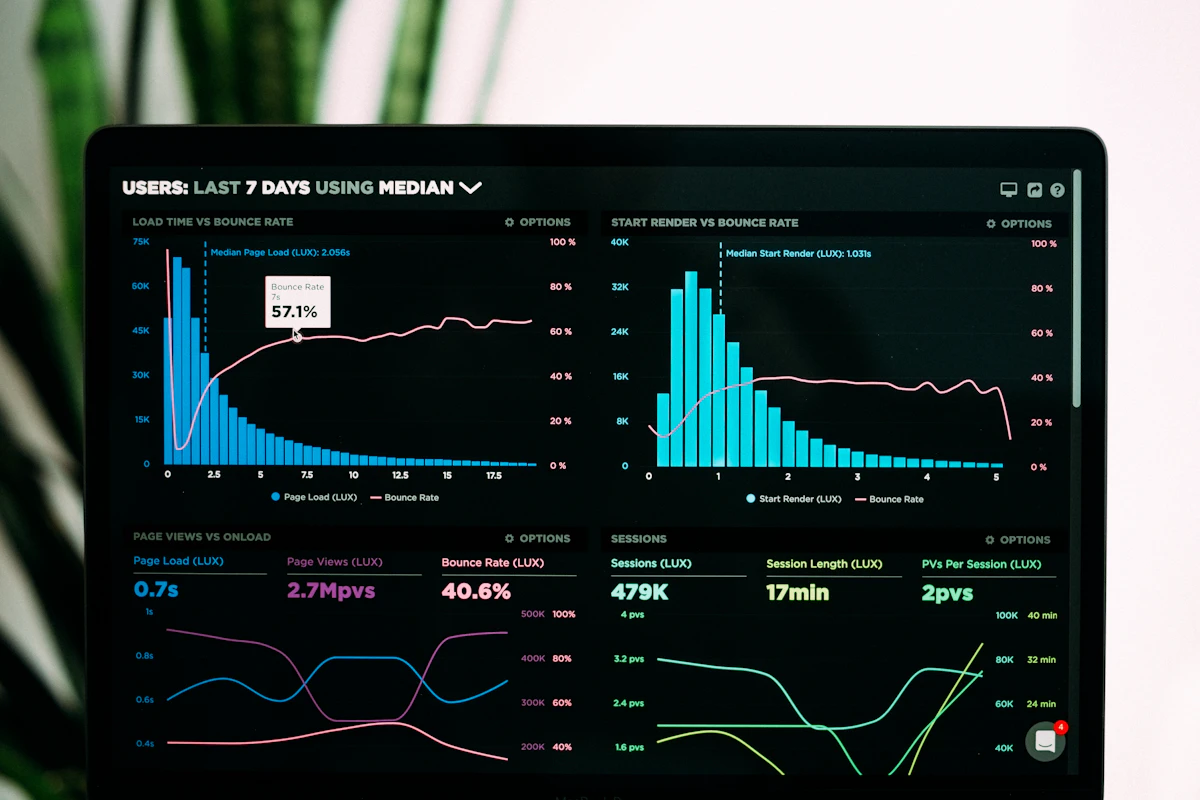
Every Second Costs You Customers and Revenue
A 1-second delay in page load reduces conversions by 7%. We optimize your Core Web Vitals to deliver lightning-fast experiences that keep visitors engaged and Google happy.
The Business Case for Speed
Website speed isn't a technical vanity metric. It directly impacts your bottom line.
53% Abandon After 3s
Over half of mobile visitors leave if your site takes more than 3 seconds to load. Every visitor lost is potential revenue gone.
Google Ranking Factor
Core Web Vitals are now a direct ranking signal. Slow sites get pushed down in search results, losing organic traffic.
7% per Second Lost
Amazon found that every 100ms of latency cost them 1% in sales. For most businesses, each second costs 7% in conversions.
User Trust Erosion
Slow sites feel broken and untrustworthy. Speed signals professionalism and competence to potential customers.
What Google Measures
Understanding the three metrics that determine your site's performance score.
Largest Contentful Paint
How long until the main content is visible. This is what users perceive as "loaded."
- Target: Under 2.5 seconds
- Affected by: Large images, slow servers, render-blocking resources
- Impact: First impression, perceived speed
Interaction to Next Paint
How quickly the page responds when users click, tap, or type. Replaces FID in 2024.
- Target: Under 200 milliseconds
- Affected by: Heavy JavaScript, long tasks, third-party scripts
- Impact: Interactivity, user frustration
Cumulative Layout Shift
How much the page unexpectedly moves around while loading. The "jumping content" problem.
- Target: Under 0.1
- Affected by: Images without dimensions, dynamic content, web fonts
- Impact: Misclicks, user annoyance
Additional Metrics
We also optimize other important performance indicators that affect user experience.
- Time to First Byte (TTFB)
- First Contentful Paint (FCP)
- Total Blocking Time (TBT)
Two-Phase Optimization
We tackle speed issues systematically, starting with quick wins before diving deeper.
Phase 1: Quick Wins
We start by implementing optimizations that deliver immediate, measurable improvements with minimal risk.
- Image Optimization - WebP/AVIF conversion, responsive sizing, lazy loading
- Browser Caching - Proper cache headers for returning visitors
- Font Optimization - Font-display swap, preloading, subsetting
- CSS/JS Minification - Smaller file sizes for faster downloads
- Third-Party Script Audit - Identify and defer non-critical scripts
Phase 2: Deep Optimization
After quick wins, we address more complex issues that require technical expertise.
- Critical CSS Extraction - Inline above-the-fold styles
- JavaScript Optimization - Code splitting, tree shaking, defer/async
- Server Response Time - Caching strategies, database optimization
- CDN Implementation - Global content delivery for faster access
- Resource Prioritization - Preconnect, prefetch, preload strategies
What We Use
Industry-standard tools for accurate measurement and optimization.
Google Lighthouse
Automated auditing for performance, accessibility, and best practices.
WebPageTest
Detailed performance testing from multiple locations and devices.
PageSpeed Insights
Real-world Chrome User Experience data combined with lab data.
Chrome DevTools
Deep dive into network, performance, and rendering issues.
Search Console
Real Core Web Vitals data from actual visitors to your site.
GTmetrix
Comprehensive analysis with waterfall charts and optimization tips.
What You Can Expect
We set realistic expectations based on your current site state. Here's what most clients achieve.
- Lighthouse Score: 90+ - From typical starting points of 30-60
- LCP under 2.5s - Often improved by 50-70%
- Green Core Web Vitals - All three metrics passing
- 15-30% bounce rate reduction - Visitors stay longer
- Improved search rankings - Better Google visibility

Speed Optimization Questions
How long does speed optimization take?
Phase 1 quick wins typically complete in 3-5 business days. Full optimization including Phase 2 takes 2-3 weeks depending on site complexity. You'll see measurable improvements after each phase.
Will optimization break my website?
No. We test every change thoroughly before deploying. We work on staging environments when possible and always maintain the ability to quickly roll back any change that causes issues.
Do you work with WordPress/Shopify/etc?
Yes. We optimize sites on all major platforms including WordPress, Shopify, Wix, Squarespace, and custom-built sites. Each platform has specific optimization techniques we've mastered.
What if my hosting is the problem?
We'll identify hosting-related issues in our audit. If your host is a bottleneck, we can recommend better alternatives and assist with migration. Sometimes a hosting change is the single most impactful improvement.
How do I maintain speed after optimization?
We provide guidelines for maintaining performance, including image optimization workflows and plugin/theme recommendations. Our Website Care packages include ongoing speed monitoring if you want hands-off maintenance.
What's the ROI of speed optimization?
Studies show every 0.1 second improvement can increase conversion rates by 8%. If you're spending on ads or SEO, speed optimization multiplies the value of that traffic by reducing bounce rates and improving conversions.
Get Your Free Speed Audit
Find out exactly how fast (or slow) your site is and what's causing the bottlenecks. Our free audit includes a detailed report with prioritized recommendations.
Results delivered within 2 business days